Rijksmuseum Essentials: A 2.5-Hour Route Through the Gallery of Honour (2026)
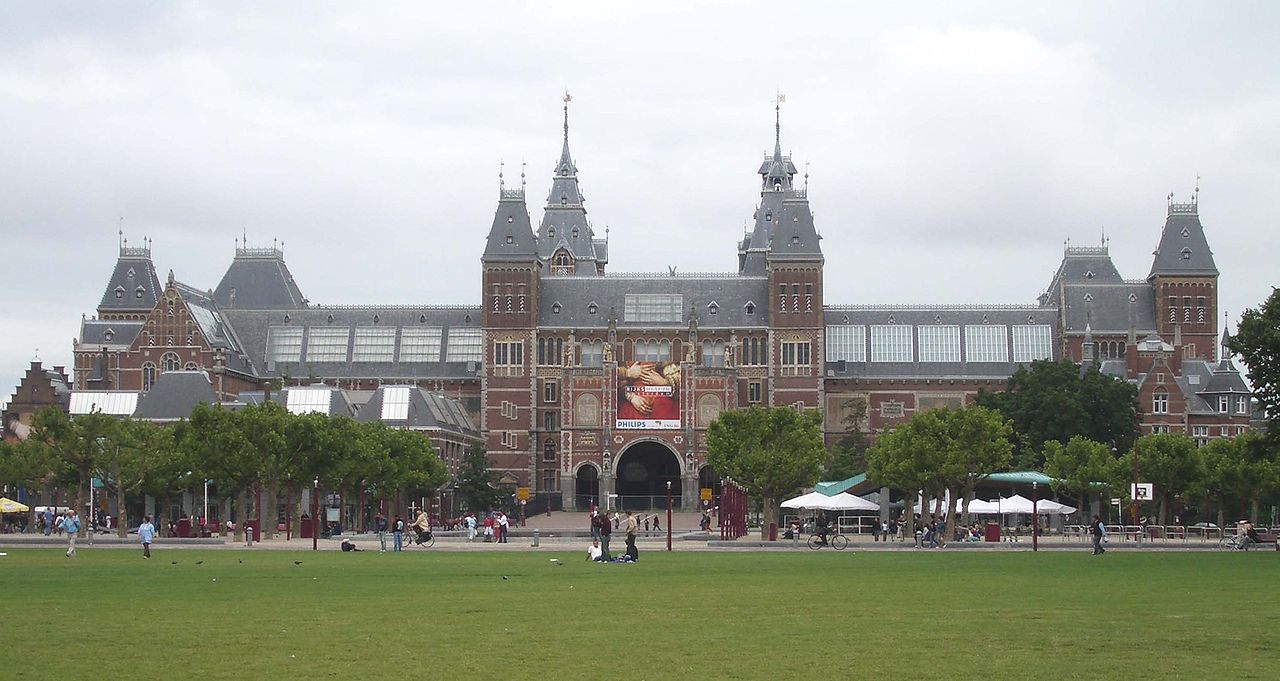

TL;DR. The Rijksmuseum is the Dutch national collection — the deepest 17th-century Golden Age painting holding in the world, inside Pierre Cuypers’s 1885 Northern Gothic Revival building, restored by Cruz y Ortiz and reopened in 2013. A 2.5-hour route runs Floor 2 first: escalator from the Atrium to the Gallery of Honour (50 min — Hals, Steen, de Hooch, Ruisdael, the Vermeer alcove with The Milkmaid and The Little Street, the Rembrandt sequence, climaxing at the Night Watch at the corridor’s end); the Doll’s Houses in Special Collections (15 min); Floor 0 Middle Ages (15 min); Floor 1 for the single Van Gogh self-portrait and Breitner (15 min); optional Asian Pavilion (15 min). €25 adult, online-only timed entry; no walk-up sales. Daily 09:00–17:00, last admission 16:30. Museumkaart €75 + €7.50 starter is the right buy from a second Dutch museum onwards. Operation Night Watch is in its varnish-removal phase through ~2027 — the painting is fully visible in the glass conservation chamber. Book a fast-track Rijksmuseum ticket on Tiqets if rijksmuseum.nl is sold out.
At a glance
- Address. Museumstraat 1, 1071 XX Amsterdam — south side of the Stadhouderskade, north edge of Museumplein. Main entry via the Atrium, reached from both ends of the Cuypers passage (the public through-tunnel that bisects the building).
- Hours. Daily 09:00–17:00, including national holidays. Last admission 16:30. Shop and café open to 18:00 without a ticket. (rijksmuseum.nl opening hours, verified 2026-05-12.)
- Tickets. €25 adult, online only with timed-entry slot — no door sales. Under-18s free with a free timed reservation. Book direct on rijksmuseum.nl; compare fast-track Rijksmuseum tickets on Tiqets if the official site is sold out.
- Free admission. Under-18s, Museumkaart, ICOM, I Amsterdam City Card, Stadspas — all still need a free timed slot. No general free-admission window.
- Tram. Tram 2 / 5 / 12 to Rijksmuseum stop. Metro 52 (Noord/Zuidlijn, opened 2018) from Centraal to Vijzelgracht, then 10-minute walk. From Schiphol: train to Amsterdam Zuid (6 min) and Metro 52 (4 min) is fastest.
- Photography. Permitted in the permanent collection — including the Night Watch glass chamber — without flash, tripod, or selfie stick.
- Bag check + accessibility. Free cloakroom in the Atrium; large suitcases refused. Step-free throughout via lifts; free wheelchair loan.
What 2.5 hours actually buys you at the Rijksmuseum
The Rijksmuseum is not an encyclopaedic museum in the Louvre or Met sense. It is a national collection — Dutch and Dutch-adjacent art accumulated through Stadtholder holdings, royal acquisitions, and civic-guard transfers since the 1885 building opened. Heavy on 17th-century Dutch painting because that is what the Dutch nation produced, and heavy on Asian art because the Dutch East India Company brought it home. No Egyptian wing, no classical antiquity. Two and a half hours buys roughly fourteen works — the ten percent that defines Dutch Golden Age painting. The closest sibling in our set is the Musée d’Orsay: both are single-tradition holdings inside celebrated late-19th-century buildings, and both reward a top-down deliberate route over a wandering one.
The building — Cuypers, the bicycle passage, the 2013 reopening
Pierre Cuypers designed the Rijksmuseum between 1876 and 1885 in a Northern Gothic Revival idiom: two glass-covered courtyards (the Atrium), a Great Hall with stained glass celebrating Dutch art history, a Gallery of Honour culminating in a dedicated Night Watch room, and a public passage cutting north–south at ground level — the Stadhouderskade-to-Museumplein through-route the city demanded be preserved.
The 1920s whitewashed Cuypers’s polychrome interior and dropped suspended ceilings into the painting galleries. Cruz y Ortiz Arquitectos won the 2001 European tender to renovate; the project ran 2003–2013, cost roughly €375 million, lowered the courtyard floors, reconnected the courtyards with an underpass beneath the public passage, recovered Cuypers’s painted decoration from archival cartoons, and built the standalone Asian Pavilion on the south side. Queen Beatrix reopened the museum on 13 April 2013, six days before her abdication.
The bicycle passage survived against the architects’ original plans — they had wanted to convert it into the entrance lobby. The Dutch Cyclists’ Union campaigned successfully to keep it public. The compromise: the Atrium sits below the passage; cyclists continue to ride over a glass roof you can stand on. (rijksmuseum.nl — The Passage.) The building is part of the visit.
Which entrance and where to start
One public entrance, reached from either end of the Cuypers passage — stairs and a lift down to the Atrium, with ticket scanners, cloakroom, café, and shop around the perimeter. The opinionated move: enter at 09:00 sharp, drop coats, ride the central escalator straight to Floor 2. Most first-time visitors orient themselves at the Atrium information desk and reach the Gallery of Honour around 10:30 — by which time coach groups have arrived and the Vermeer alcove is shoulder-to-shoulder. Start on Floor 2 and you reverse the wave: the Night Watch Gallery is genuinely walkable from 09:15 to 10:15. Reserve a museum-licensed Rijksmuseum guided tour on GetYourGuide for a sequenced 2.5-hour run with timed-entry bundled.
The 2.5-hour sequenced route — floor by floor
Times below are looking-time at each stop; budget another 15 minutes for escalators, the Atrium-to-Floor-2 traverse, and inter-room walking. Enter at 09:00.
Floor 2 — the Gallery of Honour (50 minutes)
Exit the escalator on Floor 2, walk through the Great Hall (the cathedral-like nave with the names of the Dutch masters set in the cast-iron beams), and enter the Gallery of Honour — the long top-lit corridor with side alcoves leading to the Night Watch Gallery. The corridor is the spine; the alcoves are chapter breaks. The climax is visible from the moment you enter.
1. Frans Hals — Banquet of the Officers of the St George Civic Guard (1616). The prototype the Night Watch responds to a generation later — civic-guard officers ranked around a table, the brushwork looser than any northern painter before him.
2. Jan Steen — The Merry Family (1668). Steen’s painted proverbs of domestic disorder, the wall text reading “As the old sing, so the young pipe.” Steen is the painter Western academic taste underrated longest.
3. Pieter de Hooch — The Courtyard of a House in Delft (1658). Sunlight on brick, a maid and a child framed in a Delft archway, perspective receding into a second courtyard. De Hooch’s architectural rigour is the underrated foundation under Vermeer.
4. Jacob van Ruisdael — View of Haarlem with Bleaching Grounds (c. 1670–75). Two-thirds sky, one-third land, the bleaching fields north of Haarlem where the linen industry laid cloth to whiten. Constable copied this picture.
5. Hendrick Avercamp — Winter Landscape with Ice Skaters (c. 1608). The Little Ice Age compressed into a Dutch tondo — skaters, sled-pushers, ice-fallers, a hanged horse on the far bank.
6. The Vermeer alcove — The Milkmaid (c. 1660), The Little Street (c. 1657), Woman Reading a Letter (c. 1663), The Love Letter (c. 1669–70).* Four Vermeers on adjacent walls — the densest concentration of his work outside the Mauritshuis. The Milkmaid is the painting most reproductions undersell: the impasto on the bread crust, the broken nail in the wall, the cobalt-blue apron impossibly saturated. The Little Street* is one of two surviving Vermeer cityscapes (the View of Delft in the Mauritshuis is the other). Twelve minutes — the densest twelve minutes in the museum. (Rijksmuseum — The Milkmaid.)
7. The Rembrandt sequence — The Jewish Bride (c. 1665), The Syndics of the Drapers’ Guild (1662), late Self-Portrait.* The Jewish Bride — the title is 19th-century invention; the figures may be Isaac and Rebecca — holds the hand-on-breast gesture Van Gogh said he would give ten years of his life to sit in front of for a fortnight. The Syndics*** is the cloth-merchants’ board portrait, looking up from their paperwork in the unsurpassed composition. The late self-portrait shows Rembrandt without flattery.
8. The Night Watch — Night Watch Gallery, end of the corridor. Dedicated section below.
Floor 2 — Doll’s Houses (15 minutes)
Back along the Gallery of Honour, turn into the Special Collections suite at room 2.20.
9. The Doll’s Houses — Petronella Oortman (c. 1686–1710) and Petronella de la Court. The Oortman doll’s house is a nine-room miniature canal house in tortoiseshell, pewter and walnut, reportedly costing as much as a real Herengracht canal house — roughly 30,000 guilders. Inside: Delft porcelain at a tenth scale, miniature paintings commissioned from working artists, real running water, an 83-volume miniature library. Not a child’s toy — a status object commissioned by a wealthy adult woman as a documentary inventory of her domestic world. The de la Court house beside it is older and slightly smaller. (Rijksmuseum collection.) The surrounding silver, porcelain, and ship-model rooms reward a brief walk-through.
Floor 0 — Middle Ages and early Netherlandish (15 minutes)
Down by the central lift to Floor 0 — the medieval and early-modern beginning, meaningfully calmer than Floor 2 even at peak.
10. Adriaen van Wesel — Mary altarpiece carvings (c. 1475–77). Limewood carvings from a dismantled Bois-le-Duc altarpiece, the Dutch sculptural answer to Riemenschneider — sinewy, expressive, faces individually modelled. The room that justifies the floor.
11. Lucas van Leyden — The Adoration of the Golden Calf (c. 1530). A triptych folding open onto an Old Testament dance scene — Northern Renaissance precision plus Italian-Mannerist crowd composition. Van Leyden absorbed Italian printmaking before any other northerner. Adjacent rooms hold Geertgen tot Sint Jans’s Tree of Jesse and the Master of Alkmaar Seven Works of Mercy polyptych — late-Gothic theology a few steps before Bosch.
Floor 1 — 18th and 19th century plus the Van Gogh (15 minutes)
The museum’s quietest painting floor, holding the artwork most first-time tourists assume is in the wrong building.
12. Vincent van Gogh — Self-Portrait (1887). The only Van Gogh in the Rijksmuseum, painted in Paris three years before his death. Every other Van Gogh you came to Amsterdam to see is at the Van Gogh Museum five minutes’ walk west. The Rijks self-portrait is the early-modernist version — pointillist brushwork in green and orange, the face still flush from the Antwerp years.
13. George Hendrik Breitner — Girl in a White Kimono (1894). Breitner recorded Amsterdam at the moment it industrialised — wet quays, working horses, new bridges. The Girl in a White Kimono series (thirteen variations) shows the model Geesje Kwak in studio kimonos against Japanese-print backgrounds, Dutch japonisme at its most accomplished. Neighbouring rooms hold the glimpse of the Cuypers Library through glass — the gilded reading room with iron galleries, the most photographed interior after the Great Hall.
Optional close — Asian Pavilion (15 minutes)
14. Exit via the Philips Wing south side and cross to the Asian Pavilion — a small standalone Cruz y Ortiz building opened 2013, free with the same ticket. Tang dynasty pottery on the ground floor; Hiroshige and Hokusai woodblock prints upstairs; a 14th-century bronze Dancing Shiva (Nataraja); a samurai armour. Compact, beautifully lit, consistently the least-crowded part of the museum.
The 14 essential works, at a glance
| # | Artist | Work | Year | Location | Floor |
|---|---|---|---|---|---|
| 1 | Frans Hals | Banquet of the Officers of the St George Civic Guard | 1616 | Gallery of Honour | 2 |
| 2 | Jan Steen | The Merry Family | 1668 | Gallery of Honour | 2 |
| 3 | Pieter de Hooch | The Courtyard of a House in Delft | 1658 | Gallery of Honour | 2 |
| 4 | Jacob van Ruisdael | View of Haarlem with Bleaching Grounds | c. 1670–75 | Gallery of Honour | 2 |
| 5 | Hendrick Avercamp | Winter Landscape with Ice Skaters | c. 1608 | Gallery of Honour | 2 |
| 6 | Vermeer | The Milkmaid, The Little Street, Woman Reading a Letter, The Love Letter | c. 1657–70 | Vermeer alcove, Gallery of Honour | 2 |
| 7 | Rembrandt | The Jewish Bride, The Syndics, late Self-Portrait | 1662–65 | Gallery of Honour | 2 |
| 8 | Rembrandt | The Night Watch | 1642 | Night Watch Gallery (end of corridor) | 2 |
| 9 | Petronella Oortman + de la Court | The two Doll’s Houses | c. 1670–1710 | Room 2.20, Special Collections | 2 |
| 10 | Adriaen van Wesel | Mary altarpiece carvings | c. 1475–77 | Middle Ages wing | 0 |
| 11 | Lucas van Leyden | The Adoration of the Golden Calf | c. 1530 | Early Netherlandish | 0 |
| 12 | Van Gogh | Self-Portrait | 1887 | 19th-century painting | 1 |
| 13 | Breitner | Girl in a White Kimono | 1894 | 19th-century painting | 1 |
| 14 | Asian Pavilion | Tang pottery, Hiroshige, Hokusai, Dancing Shiva | various | Separate Cruz y Ortiz building | — |
Locations reflect the post-2013 hang. The Gallery of Honour is treated as a single named space rather than a numbered-room sequence; alcove positions occasionally shift between conservation rotations. Verify a specific painting on rijksmuseum.nl the morning of arrival if it is central to your trip.
The Night Watch — what to know before you stand in front of it
Rembrandt completed Militia Company of District II under the Command of Captain Frans Banninck Cocq in 1642, on commission from the Kloveniers, one of three Amsterdam civic guards. The painting hung in the Kloveniers’ guild hall for seventy years; in 1715 it was moved to the Amsterdam Town Hall and trimmed by roughly 60 cm on the left, with smaller strips off the top and bottom, to fit the assigned wall. The removed strips were destroyed — two figures, an arch, and the original compositional balance went with them. The painting acquired its current title in the late 18th century when accumulated varnish had darkened it enough to read as nocturnal; it is in fact a daytime scene with deep chiaroscuro. The original composition survives in a smaller 17th-century copy by Gerrit Lundens (c. 1655) at the National Gallery in London.
In 2021 the Rijksmuseum used convolutional neural networks trained on Rembrandt’s brushwork and the Lundens copy to generate the missing strips at full scale, printed them on panels, and temporarily mounted them around the original canvas — restoring the original composition for the first time in 306 years. (Smithsonian on the AI restoration.) The panels have since been taken down; the painting hangs in its post-1715 trimmed state.
Operation Night Watch — the largest restoration project ever undertaken on the painting — launched summer 2019. The diagnostic first phase (2019–2024) ran macro-XRF scanning, hyperspectral imaging, and forensic pigment analysis in a glass conservation chamber built around the painting inside the Night Watch Gallery so the public could watch in real time. The second phase, underway through ~2027, is varnish removal by a team of eight conservators in shifts behind the glass. The painting remains fully visible throughout. (Rijksmuseum — Operation Night Watch.)
The painting’s modern history of damage is its own footnote — a 1975 shoe-knife attack (twelve slashes, repaired, faintly visible to a slow viewer) and a 1990 acid attack contained by the varnish. The glass chamber will likely remain in some form even after Operation Night Watch concludes. Reserve a private Night Watch guide on Viator for an art-historian-led 90 minutes in the Gallery of Honour, including the live conservation viewing.
Tickets — the actual reality in 2026
Direct from rijksmuseum.nl — €25 adult. The cheapest legitimate path and the only one the museum recognises. Walk-up sales ended after the COVID reopening; the museum is now timed-entry-only. Under-18s, ICOM, Museumkaart, and I Amsterdam City Card-holders book a free €0 timed slot through the same flow. Off-peak weekday morning slots usually stay available 24–48 hours out; Saturday and school-holiday slots sell out 1–2 weeks ahead. We do not affiliate-link the museum’s own page. Buy direct on rijksmuseum.nl.
Tiqets / GetYourGuide fast-track — €28–35. A €3–10 markup for guaranteed slot within 1–7 days and same-cart bundling. Same security, same scanner, same gallery. Right call when rijksmuseum.nl is sold out. Compare Tiqets Rijksmuseum options.
Museumkaart — €75 + €7.50 starter for non-residents, total €82.50. The Dutch national museum card, valid 12 months across ~450 museums. Break-even is roughly three Dutch museums: Rijks (€25) + Van Gogh Museum (€24) + Stedelijk (€22.50) clears the fee on a two-day Amsterdam trip. Add the Mauritshuis (€20) or the Frans Hals Museum in Haarlem (€17.50) and the maths becomes obvious. Sold at the Rijksmuseum ticket desk.
I Amsterdam City Card — from ~€85 / 24 hours. Includes the Rijksmuseum at no additional charge plus unlimited GVB transit, a canal cruise, and ~70 Amsterdam attractions (Van Gogh Museum not included). Browse I Amsterdam City Card options on Tiqets. Slot reservation on rijksmuseum.nl still required.
Around the Rijksmuseum — the Museum Quarter
The Rijksmuseum anchors Museumplein, the four-museum grass square that is Amsterdam’s art-tourism centre.
- Van Gogh Museum — 200 metres west across Museumplein, 5 minutes on foot. The largest Van Gogh holding in the world: ~200 paintings, Sunflowers, the Arles Bedroom (first version), Wheatfield with Crows, Almond Blossom. The natural Amsterdam-art pair with the Rijks. See our Van Gogh Museum essentials.
- Stedelijk Museum — 300 metres north-west. Modern and contemporary from 1880 onwards in Weissman’s 1895 building plus Benthem Crouwel’s 2012 “Bathtub” extension. Mondrian, De Stijl, CoBrA, Beuys, Newman — the strongest post-war collection in the Netherlands. Routinely overlooked; worth two hours.
- Concertgebouw — 300 metres south. The 1888 concert hall with one of the four best acoustics in the world. Free 30-minute lunchtime concerts on most Wednesdays at 12:30.
- Moco Museum — 100 metres south-east. Commercial pop-art venue (Banksy, KAWS) in the 1904 villa next to the Van Gogh Museum. Skip on a serious art-led trip.
- Vondelpark — 250 metres west of the Van Gogh Museum. The 47-hectare Amsterdam park; the natural lunch-picnic spot.
For a wider Holland art trip, the Frans Hals Museum in Haarlem is 20 minutes by train from Centraal — a half-day extension that completes the Hals you started in the Gallery of Honour. Book a Haarlem day trip on GetYourGuide. Browse Museum Quarter walking tours for a guided three-museum circuit.
Where to eat between viewings
RIJKS — inside the museum, Philips Wing. One Michelin star, executive chef Joris Bijdendijk since 2014, renovated 2023. “Cuisine of the Low Countries” through tasting menus from Dutch and Flemish produce. Lunch from ~€65, tasting menus €130–€175; reserve two weeks ahead. (Michelin Guide listing.) The right call for the celebratory close; not the right call for a between-viewings lunch.
Café Le Tambourin — Atrium. The museum’s casual café, accessible without re-entering security. Sandwiches, soups, salads at standard museum prices (~€8–€16). Convenient; the Atrium itself is worth the seat.
Albert Cuyp Market — De Pijp, 8 minutes south. The largest daily street market in the Netherlands. Stroopwafels, haringbroodje, Surinamese roti, Indonesian nasi goreng. A different city from the Museum Quarter.
Café Loetje — Johannes Vermeerstraat 52, 5 minutes south. Old-Amsterdam eetcafé serving the biefstuk van de haas Dutch food writers rank as the city’s best steak. €25–€32 per main; the right call for a between-museums lunch.
Where to stay
Museum Quarter (Oud-Zuid) — luxury, walking-distance. Conservatorium Hotel (Van Baerlestraat 27), the Piero Lissoni 2011 conversion of the 1898 Sweelinck Conservatory, runs €600–€1,200 in shoulder season. Hotel Okura Amsterdam, five-star with two Michelin-starred restaurants (Yamazato, Ciel Bleu), runs €350–€650. Browse Museum Quarter hotels on Booking.
De Pijp — mid-range, trendy, walkable. The neighbourhood south-east of the Heineken Brewery, on the same 1880s grid as the museum. Sir Albert Hotel (Albert Cuypstraat 2–6) at €220–€380; Hotel V Frederiksplein at €180–€290. 12 minutes’ walk to the Rijks; the right neighbourhood for a first-time trip on a non-luxury budget. Browse De Pijp hotels on Booking.
Canal Belt (Grachtengordel) — mid-luxury, the postcard Amsterdam. Walking distance to both the Rijks (15–20 min) and the historic centre. Pulitzer Amsterdam (25 connected canal houses) at €420–€800; The Hoxton Amsterdam at €250–€420; Ambassade Hotel on the Herengracht, small-luxury literary option. Browse Canal Belt hotels on Booking.
The opinionated pick: Museum Quarter if budget permits, De Pijp at half the rate.
FAQ
How much does the Rijksmuseum cost in 2026? €25 adult, booked online only with a timed-entry slot — the museum no longer sells walk-up tickets at the door. Under-18s enter free with a free timed reservation. The Museumkaart at €75 plus a €7.50 starter fee covers the Rijks and ~450 other Dutch museums for 12 months. The I Amsterdam City Card includes the Rijks at no additional charge, slot reservation still required.
Is the Rijksmuseum free for tourists? No. No free-admission hour for adults. Free categories are under-18s, Museumkaart, ICOM, I Amsterdam City Card, and Stadspas holders — all still needing a free timed slot. First-time tourists with no card pay €25.
Where is the Night Watch at the Rijksmuseum? At the far end of the Gallery of Honour on Floor 2, in the dedicated Night Watch Gallery, aligned with the corridor so the painting is visible from ~30 metres away on entry. Inside a glass conservation chamber for Operation Night Watch, fully visible to the public.
How long do you need at the Rijksmuseum? Two and a half hours for a deliberate route through the Gallery of Honour, Doll’s Houses, the Floor 0 medieval wing, and Floor 1’s Van Gogh. Three hours with the Asian Pavilion added. Four to five hours for a full visit including a temporary exhibition.
Can I take a photo of the Night Watch? Yes — without flash, tripod, or selfie stick. The current photograph includes the glass conservation chamber and any conservators on shift, which has become part of the image in its 2026 form.
Is the Museumkaart worth it for tourists? Yes from the second Dutch museum onwards, no for a single Rijks visit. At €82.50 total, break-even is roughly three museums: Rijks + Van Gogh + Stedelijk already clears the fee on a two-day Amsterdam trip.
What’s the difference between the Rijksmuseum and the Van Gogh Museum? The Rijks is the Dutch national collection — primarily 17th-century Golden Age painting plus Asian art and decorative arts. The Van Gogh Museum, 5 minutes west on Museumplein, holds the world’s largest single-artist Van Gogh collection. The Rijks owns one Van Gogh (a Paris-period self-portrait on Floor 1). Complementary, not substitutes.
Is the Asian Pavilion included in the Rijksmuseum ticket? Yes. Small separate Cruz y Ortiz building south of the main museum, admission included in the €25 ticket — Tang dynasty pottery, Japanese woodblock prints, samurai armour, the Dancing Shiva. Budget 20–30 minutes.
What’s the best time of day to visit? 09:00 sharp on a weekday, ideally Tuesday or Wednesday outside Dutch school-holiday season. The Gallery of Honour is genuinely walkable for the first 60–75 minutes. Second-best: the final 90 minutes (15:00–16:30 admission). Worst: Saturday afternoons and the King’s Day weekend in late April.
Editor note
Written 2026-05-12 by travel.art editorial. Last verified 2026-05-12. A re-verification pass is scheduled for 2026-09-15 before the Willem de Kooning at Work exhibition opens 9 October 2026; annual rebuild 2027-04-15.
Sources for time-sensitive facts (2026 ticket prices, opening hours, Operation Night Watch status, Gallery of Honour layout, doll’s house display location, 2026 exhibition programme, Museumkaart pricing, I Amsterdam City Card inclusions, transit): rijksmuseum.nl opening hours and prices, rijksmuseum.nl — The Passage, rijksmuseum.nl — Operation Night Watch, rijksmuseum.nl — 2026 exhibition programme, rijksmuseum.nl — The Milkmaid, rijksmuseum.nl — Petronella Oortman doll’s house, museum.nl — Museumkaart, and the Smithsonian feature on the AI Night Watch reconstruction.
Verification debt. (1) Exact alcove positions within the Gallery of Honour for individual Vermeers and the Rembrandt self-portrait sequence — the Rijksmuseum does not publish numbered rooms within the Gallery of Honour the way the Prado and Met do; positions occasionally rotate between conservation cycles. (2) Doll’s House room number — listed here as 2.20 from the museum’s own collection-object page; the Special Collections suite has been lightly reorganised since 2020 and the room designation may shift slightly. (3) Friday late-opening hours — the museum’s current schedule lists 09:00–17:00 daily with no permanent Friday extension; older third-party guides still report a Friday-until-22:00 closing time which is no longer in effect. Confirm any seasonal late nights on rijksmuseum.nl/en/whats-on before scheduling an evening visit.
If you spot a fact that needs updating, write to [email protected].
Related travel.art guides: - Van Gogh Museum Essentials: A 2-Hour Route Through the World’s Largest Van Gogh Collection — Amsterdam-pair cornerstone, 5 minutes’ walk west across Museumplein. - Musée d’Orsay Essentials: A 2-Hour Route Through the Most Important Rooms — the closest international comparison: single-tradition national collection inside a late-19th-century landmark building. - The Louvre in 3 Hours: A Curated Route Plus the Skip-the-Line Reality — encyclopedic-museum sibling, for comparison. - Museo del Prado Essentials: A 2-Hour Route Through the Most Important Rooms — national-collection sibling, Madrid. - The Uffizi Essentials: A 2-Hour Route Through the Most Important Rooms — sibling museum-essentials cornerstone, Florence. - The British Museum Essentials: A 2-Hour Route Through the Great Court — encyclopedic-museum sibling, London. - The Met Essentials: A 3-Hour Route Through the Fifth Avenue Building — encyclopedic-museum sibling, New York. - More from travel.art