The Louvre in 3 Hours: A Curated Route Plus the Skip-the-Line Reality
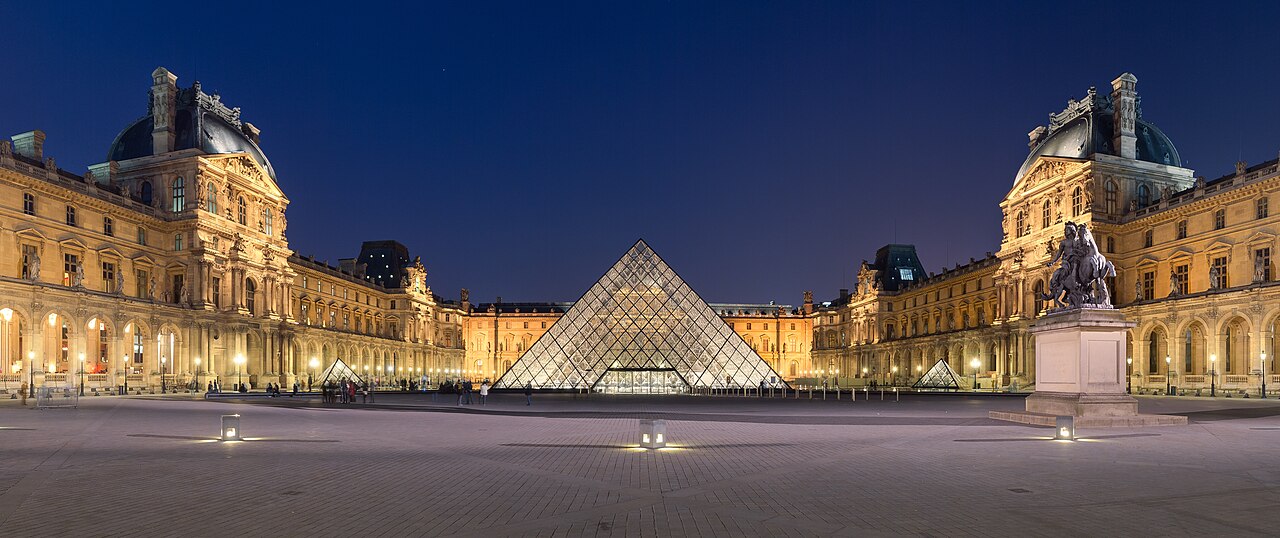

TL;DR. Three hours at the Louvre is one wing, well. Buy a timed-entry ticket on louvre.fr for the 09:00 slot (€22 EU passport / €32 non-EU, since the 14 January 2026 reform), enter via the Carrousel underground (not the Pyramid), and stay in the Denon wing. Route in order: Winged Victory of Samothrace → optional Apollo Gallery detour → Mona Lisa in Salle 711 (the Wedding at Cana opposite is the work most listicles miss) → Grande Galerie for Virgin of the Rocks and La Belle Ferronnière → Salle 700 for Coronation of Napoleon, Liberty Leading the People, Death of Sardanapalus → cross to Sully for Venus de Milo and the Great Sphinx of Tanis → optional Richelieu add-ons (Code of Hammurabi, Vermeer’s Lacemaker) if pace is loose. The skip-the-line marketplace is mostly upcharge — louvre.fr direct is the actual fast lane. Wednesday and Friday late nights (open until 21:45) are the single best window of the week.
At a glance
- Address. Musée du Louvre, 99 Rue de Rivoli, 75001 Paris, France.
- Opening hours. Mon, Thu, Sat, Sun 09:00–18:00 (last entry 17:00). Wed and Fri 09:00–21:45 (last entry 20:45). Closed Tuesdays. Closed Jan 1, May 1, Dec 25. (louvre.fr/en/visit, working figures verified 2026-05-08; re-verify on publish day.)
- Standard ticket. €22 for EU/EEA passport holders, €32 for non-EU visitors — the new two-tier structure took effect 14 January 2026 under the Louvre Nouvelle Renaissance funding plan. Buy timed-entry online via louvre.fr. Free for under-18s, EU residents under 26, disabled visitors plus companion. First Friday of each month after 18:00 is free for all (excluding July and August).
- Time needed. 3 hours minimum for the curated route below. 5+ hours to add Sully and Richelieu in any depth. A “complete” Louvre is a fiction — the museum holds roughly 35,000 works across three wings.
- Best entrance. Carrousel du Louvre underground (Métro line 1/7, Palais Royal–Musée du Louvre).
- Audio guide. Free Louvre app on iOS/Android, route-aware, multilingual. On-site rental ~€6 if you’d rather not use your phone.
- Photography. Permitted in permanent collections — no flash, no tripod, no selfie stick.
- Wi-Fi + accessibility. Free Wi-Fi throughout. Step-free across all three wings; reserved access lane at every entrance; free wheelchair loan.
- Bag rules. Lockers free for cabin-size or smaller. Suitcases and backpacks larger than 55×35×20 cm refused at security.
The Louvre + Paris Art Map — entrances, métro, neighbouring museums, lunch
The three Louvre entrances (Pyramid, Carrousel, Porte des Lions), the three closest métro stops, Musée d’Orsay across the Seine, Orangerie at the Tuileries’ west end, Pompidou (closed for renovation through 2030), Sainte-Chapelle, the Tuileries, lunch options near the museum, and the closest hotels. Tap a filter pill to show only what you need — e.g. only ⭐ entrance + 🚇 tube to plan logistics, or 🏛 museum to plan a Paris Museum Pass day.
The Louvre vs the Orsay vs the Orangerie — which Paris museum on which day?
| Louvre | Musée d’Orsay | Orangerie | Centre Pompidou | |
|---|---|---|---|---|
| Era covered | Antiquity → 1848 | 1848 → 1914 | Monet 1870–1926 + Walter-Guillaume | 1905 → present (closed for renovation through 2030) |
| Time needed | 3 h minimum (one wing) | 2–3 h | 1.5 h | n/a until 2030 reopening |
| 2026 standard ticket | €22 EU passport / €32 non-EU | €16 online / €14 walk-up | ~€12.50 standalone | closed |
| Free for | Under-18, EU under-26, 1st Fri after 18:00 (excl. Jul–Aug) | Under-18, EU/EEA under-26, 1st Sun (timed slot) | Under-18, EU/EEA under-26 | — |
| Key works | Mona Lisa, Winged Victory, Venus de Milo, Coronation of Napoleon | Monet, Renoir, Degas, Van Gogh, Cézanne, Manet | 8 Monet Water Lilies (orientation: oval rooms by Monet’s own design) | — |
| Queue strategy | 9:00 timed slot via louvre.fr → Carrousel entrance | Timed-entry required since 10 Mar 2026; entrance C (62 rue de Lille) fastest | Walk-up usually OK; rarely queues | — |
| Distance from Louvre | — | 8 min walk via Passerelle Léopold-Sédar-Senghor | 10 min walk through Tuileries | 12 min walk east |
| Best combo with Louvre | (you’re here) | Louvre AM + Orsay PM = 5 h day, €33 separate or Paris Pass €70/2d | Louvre AM + Orangerie before lunch = 4 h compact | n/a |
| 2026 ticket source | louvre.fr | musee-orsay.fr/en/visit | musee-orangerie.fr/en | — |
The natural Paris-art-day pairing for first-time visitors is Louvre morning + Orsay afternoon — Louvre 9:00–12:30 via Carrousel, lunch in the Tuileries or at Café Marly, Orsay 14:00–16:30 via entrance C. A Paris Museum Pass at €70/2 days covers both plus Orangerie + Sainte-Chapelle + Cluny + Rodin, breaking even at three museums.
What you actually have time for in 3 hours
Three hours is 180 minutes; subtract 15 for security and the cloakroom and 20 for walking between halls and you have 145 minutes of looking time. Enough — generously — for twelve works at twelve minutes each. Nowhere near enough for “the Louvre.”
The honest answer is: one wing, well. The Louvre is structured as three wings — Denon (south, along the Seine), Sully (east, around the Cour Carrée), and Richelieu (north, along Rue de Rivoli) — plus the under-pyramid hall that connects them. Crossing wings costs 10–15 minutes of walking each time. Most listicles list works across all three without saying so, which is the single biggest reason first-time visitors burn 90 minutes lost.
Denon is the right default. The Mona Lisa, Winged Victory, Liberty Leading the People, Coronation of Napoleon, Wedding at Cana, La Belle Ferronnière, Virgin of the Rocks, Apollo Gallery, and Death of Sardanapalus are all Denon. Venus de Milo and the Great Sphinx of Tanis are a short cross into Sully. That is eleven of twelve essentials, less than 200 metres of walking. Richelieu — the Vermeers, the Mesopotamian wing, the Rembrandts, the French primitives — is its own visit, on a return trip.
If the Louvre is your only Paris museum, the natural complement is the Musée d’Orsay for 19th-century painting; our Paris art guide sequences a full 3-day route. For now, treat the next three hours as a single artwork.
The sequenced route — Denon-led, Richelieu-Sully optional
Enter at the Carrousel underground entrance at 99 Rue de Rivoli — the photogenic glass Pyramid queue is routinely 20–30 minutes longer at peak. From the under-pyramid hall, take the Denon escalator to the first floor.
0:00–0:05. The Daru staircase lifts you to Winged Victory of Samothrace — Hellenistic Nike, headless, mid-flight, the stairwell built around her. Five minutes; she rewards approach more than examination.
0:05–0:15. Optional detour: turn left at the top of the staircase into the Apollo Gallery (Galerie d’Apollon). Charles Le Brun’s 1663 painted ceiling, French crown jewels including the Regent diamond, recently restored. Ten minutes. One of the few interiors in the museum where you feel inside the Louvre Palace rather than inside a museum.
0:15–0:35. South through the Denon corridors to Salle 711 (Salle des États) — the Mona Lisa room. The painting sits in a freestanding bullet-resistant case; queue management is a forward-only line. 15–20 minutes including queue. Critical: while everyone faces Mona Lisa, the Wedding at Cana by Veronese is on the opposite wall — 6.77×9.94 m, the largest painting in the Louvre, routinely missed because visitors arrive turned the wrong way. Look at it. (louvre.fr collection notice for the Wedding at Cana.)
0:35–0:55. Exit Salle 711 into the Grande Galerie — the 460-metre Italian-painting corridor. Virgin of the Rocks and La Belle Ferronnière (both Leonardo) hang here, along with Caravaggio’s Death of the Virgin. Walking against the flow gets you out of the Mona Lisa exit crowd. Twenty minutes.
0:55–1:20. South through the Mollien rooms to Salle 700: four monumental 19th-century French paintings in a single space — David’s Coronation of Napoleon, Delacroix’s Liberty Leading the People and Death of Sardanapalus, Géricault’s Raft of the Medusa. 25 minutes. Closer to standing inside a 19th-century academic salon than to viewing easel paintings.
1:20–1:35. Cross down to ground floor and into Sully. Venus de Milo stands in Salle 346 at the end of a short Greek-classical corridor. Ten minutes.
1:35–1:50. Continue into Salle 338 for the Great Sphinx of Tanis — granite, 26 tonnes, in a quiet crypt-like room that is almost always less crowded than the painting halls upstairs. Photograph from a low angle.
1:50–3:00. Two choices. Conservative: walk the Egyptian sequence on Sully ground floor for 30 more minutes, exit, eat. Ambitious: cross to Richelieu for the Code of Hammurabi in Salle 227 — basalt stele, 1750 BCE, foundational legal text of Western antiquity — and ride up to Salle 837 for Vermeer’s Lacemaker. Both Richelieu stops cost about 30 minutes of walking. Only do it if you started at 09:00 sharp and your three-hour clock is still loose at minute 110.
Pre-book a louvre.fr-equivalent timed-entry through Tiqets if your date is sold out — same slot mechanic, useful only when louvre.fr’s allocation is gone.
The 12 essential works, at a glance
| Work | Artist / Date | Room | Wing |
|---|---|---|---|
| Mona Lisa | Leonardo, c. 1503–19 | Salle 711 (Salle des États) | Denon, 1st floor |
| Wedding at Cana | Veronese, 1563 | Salle 711 (opposite wall) | Denon, 1st floor |
| Winged Victory of Samothrace | c. 200–190 BCE | Daru staircase | Denon |
| Apollo Gallery + crown jewels | Le Brun ceiling, 1663 | Salle 705 | Denon, 1st floor |
| Virgin of the Rocks | Leonardo, c. 1483–86 | Grande Galerie | Denon, 1st floor |
| La Belle Ferronnière | Leonardo, c. 1490–95 | Grande Galerie | Denon, 1st floor |
| Coronation of Napoleon | David, 1805–07 | Salle 702 (Mollien) | Denon, 1st floor |
| Liberty Leading the People | Delacroix, 1830 | Salle 700 (Mollien) | Denon, 1st floor |
| Death of Sardanapalus | Delacroix, 1827 | Salle 700 (Mollien) | Denon, 1st floor |
| Venus de Milo | c. 100 BCE | Salle 346 | Sully, ground floor |
| Great Sphinx of Tanis | c. 2600 BCE | Salle 338 | Sully, ground floor |
| Code of Hammurabi (optional) | c. 1750 BCE | Salle 227 | Richelieu, ground floor |
The thirteenth work — the swap-in for travelers who would rather see Vermeer than Mesopotamia — is The Lacemaker in Salle 837, Richelieu second floor. 24×21 cm and a 90-second viewing that pays off the Richelieu trip. The Salle numbers above are the post-2014 reorganisation numbers; pre-2014 listicles use a different scheme and are unreliable.
What to skip — and why the conventional listicles get it wrong
Every major Louvre listicle is built around a 10-or-12-item canon. A 3-hour route needs a rejection list of roughly the same size. The five most common mis-allocations:
The Raft of the Medusa. Géricault, monumental, in Salle 700 — included in our route as a side-glance because it shares the room with Coronation of Napoleon and Liberty Leading the People. Not a stand-alone destination on a 3-hour visit.
Salle des Cariatides. Renaissance French sculpture, Sully ground floor. Historically important, off the natural Denon route. Skip on three hours, return on a five-hour visit.
The Egyptian sequence beyond the Sphinx. Sully ground and second floors, twelve rooms that need 90 minutes to walk honestly. The Sphinx is the punctuation mark; exit there.
Decorative arts in Richelieu. The Napoleon III apartments are the most spectacular interior in the museum and a 45-minute commitment off-route. Wonderful. Not for today.
The Islamic Art galleries under the Cour Visconti glass roof in Denon ground floor. A museum within the museum, world-class Iznik tiles, deserves its own visit. Skip on a first 3-hour pass.
The principle is the same in every case: the marginal next work is worth less than the time it costs to get to it. A serious return visit reverses the list and visits only the skip pile. That is the second-day Louvre.
Book a private 3-hour Louvre guide for a return visit if you want curatorial sequencing through the parts a 3-hour first visit has to skip.
Skip-the-line: the honest comparison
The most-asked question about the Louvre and the most poorly-served by the SERPs. The actual mechanics:
louvre.fr direct timed entry — €22 EU / €32 non-EU. The genuine skip-the-line. Pick the earliest available slot (09:00 on your day), arrive at the Carrousel ten minutes before, present your QR code, you are inside by 09:05. 30-minute grace window after your slot. Tickets release roughly two months in advance; popular weekends in July–August can sell out four weeks out.
Tiqets and GetYourGuide standard timed-entry — €25–35. These platforms draw from the same Louvre database; the €3–13 markup is a service fee, not faster entry. Use them in three specific cases: louvre.fr is sold out for your date, you want a single-cart booking for multiple Paris attractions, or platforms have released last-minute inventory the official site no longer shows. Compare timed-entry options on Tiqets when louvre.fr is sold out.
Tiqets and GetYourGuide guided tours with skip-the-line — €60–95. Real products. A 2.5–3 hour guided tour with an English-speaking art-historian guide, Louvre-issued radio headset, and a timed-entry slot under the operator’s quota. The skip-the-line element is identical to direct booking; what you pay for is the guide and the route logistics. Book a 3-hour guided Louvre highlights tour on GetYourGuide. For visitors who want the Mona Lisa prioritised, the skip-the-line + Mona Lisa first-access tour routes guests to Salle 711 in the first 20 minutes before crowds build.
Viator private tours — €150–400. 2–4 hours, customisable route. Useful for accessibility needs, families with under-10s, professional/collector context, or visitors who want a guide who can step off the highlights canon entirely. Browse private Louvre guides on Viator.
Paris Museum Pass — €70 (2 days), €90 (4 days), €110 (6 days). (Working figures; [verify on parismuseumpass.fr].) Covers the Louvre and roughly 60 Paris-area museums. The catch: still requires a free timed-entry reservation on louvre.fr — the Pass replaces the ticket cost, not the slot. Break-even is three museums in two days. Book the Paris Museum Pass if your trip includes three or more eligible museums.
Combo tickets. Tiqets and GetYourGuide sell Louvre + Musée d’Orsay combos (~€55) and Louvre + Seine cruise combos (~€45). Convenience products, not discounts — you pay roughly the sum. Louvre + Orsay combo on Tiqets if you want a single cart for two museums.
Walk-up. Allowed; queue 45–90 minutes in summer, 15–30 minutes in shoulder months. Strongly not recommended.
Summary: louvre.fr is the right answer for almost every visitor. Exceptions are sold-out dates (Tiqets/GetYourGuide for the same slot at a markup), wanting a guide (book the guided tour), and accessibility-driven needs (private). Nothing in the marketplace meaningfully skips the timed-entry mechanic — they all use it.
Best time to visit — and the late-night Wed/Fri trick
The Louvre’s best window is Wednesday or Friday after 18:00. The museum is open until 21:45 on those two days, last entry at 20:45. After 18:00 the day-tripper density drops by roughly 60% — coach tours have left, school groups are gone, and the Salle des États becomes genuinely viewable (five at the rope instead of fifty). Café Mollien stays open until 21:00.
Second-best window: Monday at 09:00. Tuesday closure pushes Monday demand up but the morning is still the lightest weekday window. Saturday afternoons are worst; Sunday is heavy but absorbs better than Saturday.
The first Friday of each month after 18:00 is free for all (excluding July and August). Crowded — the 17:30 queue looks like Saturday at 14:00 — but for budget-locked travelers, the right answer.
July and August are the worst months: hot, crowded, highest day-tripper share. October, late February, and the first half of March are the best months. December weekdays are surprisingly light — Paris’s tourist density spikes around the Champs-Élysées Christmas market, not the Louvre.
Sidebar — If you have only 90 minutes. Carrousel → Daru staircase → Winged Victory (5) → Salle 711 Mona Lisa + Wedding at Cana (15) → Grande Galerie Belle Ferronnière + Virgin of the Rocks (10) → Salle 700 Coronation of Napoleon + Liberty Leading the People + Death of Sardanapalus (20) → cross to Sully Venus de Milo (10) → exit. Eight works, ~70 minutes of looking + 20 of walking. Skip Apollo, the Sphinx, the Lacemaker. The realistic CDG-layover shape.
Sidebar — If you have 5+ hours: the Sully addition. After the 3-hour Denon route, lunch 30 minutes in the Tuileries (skip in-museum cafés on a long day). Re-enter and walk Sully ground floor in full: the Egyptian sequence beyond the Sphinx, into the New Kingdom and Coptic rooms, then Sully second floor for early French painting — Watteau’s Pierrot, La Tour’s Cheat with the Ace of Diamonds, Chardin’s Ray. Add 60 minutes for Richelieu’s Khorsabad Assyrian winged-bull reliefs and Vermeer’s Lacemaker. Total: 5.5–6 hours.
Sidebar — The Mona Lisa room logic, and the Nouvelle Renaissance plan. The Mona Lisa has been in Salle 711 (Salle des États) since 2005, in a freestanding bullet-resistant case facing Veronese’s Wedding at Cana. President Macron’s January 2025 Louvre Nouvelle Renaissance programme committed the museum to a dedicated, separately-ticketed room for the painting, alongside a new eastern entrance under the Cour Carrée and a comprehensive renovation of Denon and Sully — budget reported around €700–800 million, project window through 2031. As of May 2026 the Mona Lisa has not moved; the dedicated room is in design phase and louvre.fr continues to direct visitors to Salle 711. (Verify on louvre.fr/en/explore + recent press on publish day; the relocation will trigger a substantial revision of this article.)
Practical: getting there, food, photography, accessibility, kids
Getting there. Métro line 1 or 7 to Palais Royal–Musée du Louvre drops you at the Carrousel entrance directly. RER B from CDG to Châtelet–Les Halles is 35 minutes; from there 5 minutes on foot. From the Eurostar at Gare du Nord (the natural Louvre entry for travelers combining a Paris stop with Frieze London 2026), Métro 4 to Châtelet then line 1 puts you at the museum in 12 minutes door-to-door. From Orly: Orlyval to Antony, then RER B, ~50 minutes total.
Food inside. Café Mollien on the Denon first-floor terrace is the in-hall option and the only one with a view (north onto the Cour Napoléon). Restaurant Le Grand Louvre under the Pyramid is a 75-minute sit-down — too slow for a 3-hour visit. The Carrousel food court is mass-market but quick. The honest move on a 3-hour visit: eat outside. Rue Saint-Honoré has Pirouette, Spring, and Verjus within 10 minutes’ walk; Tuileries stalls do crepes and croque-monsieur under €10.
Photography. Permanent collections, no flash, no tripod, no selfie stick. Forbidden in temporary exhibitions when signed. Salle des États permits Mona Lisa photography; flash-attempt detection is automatic and will get you waved out.
Accessibility. Step-free across all three wings, elevators between every floor, reserved access lane at every entrance. Free wheelchair loan at the under-pyramid cloakroom (manual walk-up, motorised by reservation). Service dogs welcome. The Louvre app has a screen-reader mode and audio-described routes.
Kids. Under-18s enter free. The Louvre app has dedicated kids’ routes for ages 6–10. Strollers OK; some Sully corridors are tight. Highest-engagement rooms for under-10s are the Apollo Gallery (crown jewels at child-eye height) and the Egyptian crypt (children read the 26-tonne Sphinx as a dragon). Pace painting galleries accordingly.
Museum-pass logic. Note that the Centre Pompidou main museum is closed for renovation through 2030 under the Pompidou 2030 programme; only the Atelier Brancusi and selected satellite spaces are open during the works. If your trip still includes Orsay, Orangerie, Cluny, Rodin, and Sainte-Chapelle, the Paris Museum Pass at €70/2 days breaks even at three museums. For a one-museum Louvre-only visit, the €22 ticket is correct.
Eurostar layover from London. The 06:01 St. Pancras departure arrives Gare du Nord at 09:17 CET; with a 09:30 timed-entry slot you walk the 3-hour Denon route, eat lunch in the Tuileries, and return for the 16:13 Eurostar back. (Verify Eurostar 2026 schedule.) The cleanest single-day Louvre layover from London.
Where to sleep nearby. The 1st arrondissement around the Louvre quietens once day-tripper traffic clears. Hôtel Therese on rue Thérèse (Place du Marché Saint-Honoré, 7 minutes on foot) is the design-conscious 4-star with a quiet courtyard. Book Hôtel Therese. Hôtel du Louvre at Place André Malraux (Hyatt Unbound Collection, directly opposite the east colonnade, 4 minutes on foot) is the historical hotel — Pissarro painted Place du Théâtre Français from his window during an 1898 stay. Book Hôtel du Louvre. Le Pradey on rue Saint-Roch (5 minutes, intimate boutique) is the smaller design-led alternative. Book Le Pradey. Walking-distance hotels in the 1st run €350–800 in shoulder season and €500–1,200 in May–September; the Marais (12-minute walk via Pont des Arts) is the natural cheaper alternative — browse Marais hotels on Booking.
Editor note
Written 2026-05-08 by travel.art editorial. Last verified 2026-05-08. Sources for time-sensitive facts: louvre.fr/en/visit, louvre.fr/en/explore (collection notices), louvre.fr news pages on the Nouvelle Renaissance programme, parismuseumpass.fr.
Working figures pending re-verification. Three items to lock against primary sources before final publish: (1) the Mona Lisa’s room — still Salle 711 as of May 2026, but the Nouvelle Renaissance dedicated-underground-gallery project (Macron-announced January 2025, financed in part by the new two-tier ticket pricing) will eventually relocate her and trigger a substantial revision of this article; (2) any current-week closures along the route, since the Louvre rotates room closures weekly; (3) Paris Museum Pass pricing (working figure €70/2 days). The two-tier ticket (€22 EU / €32 non-EU, effective 14 January 2026) is confirmed. Annual rebuild scheduled for 2027-04-15.
If you spot a fact that needs updating — a closure, a price change, a rehang, or the moment the Mona Lisa moves rooms — write to [email protected].
Related travel.art guides: - Art Basel Switzerland 2026: A Visitor’s Guide to the Fair, Liste, and the Week Around Both — a Basel-week traveler can layer a Paris stop on either end via the 3-hour TGV. - Frieze London 2026: Regent’s Park Visitor Guide — Eurostar from St. Pancras to Gare du Nord, Métro 4 to Châtelet, line 1 to the Louvre: 12 minutes door-to-door. - Vatican Museums & Sistine Chapel skip-the-line — sibling museum-essentials cornerstone. - The Uffizi Essentials: A 2-Hour Route — sibling museum-essentials cornerstone. - More from travel.art